PORTScast Calendar
Did PORTScasts just become your new favorite show?
Tune in with classrooms from around California to engage with a new park expert daily!
Join Angel Island for a meditative journey about nature. From indigenous to immigration history that spans thousands of years, nature has always been intertwined with people. Learn the importance of protecting the Earth for the present and the future! *Teachers, try to have enough room for students to stretch and sit for a guided meditation! But if tables can’t be moved, they can also follow along in their chairs.
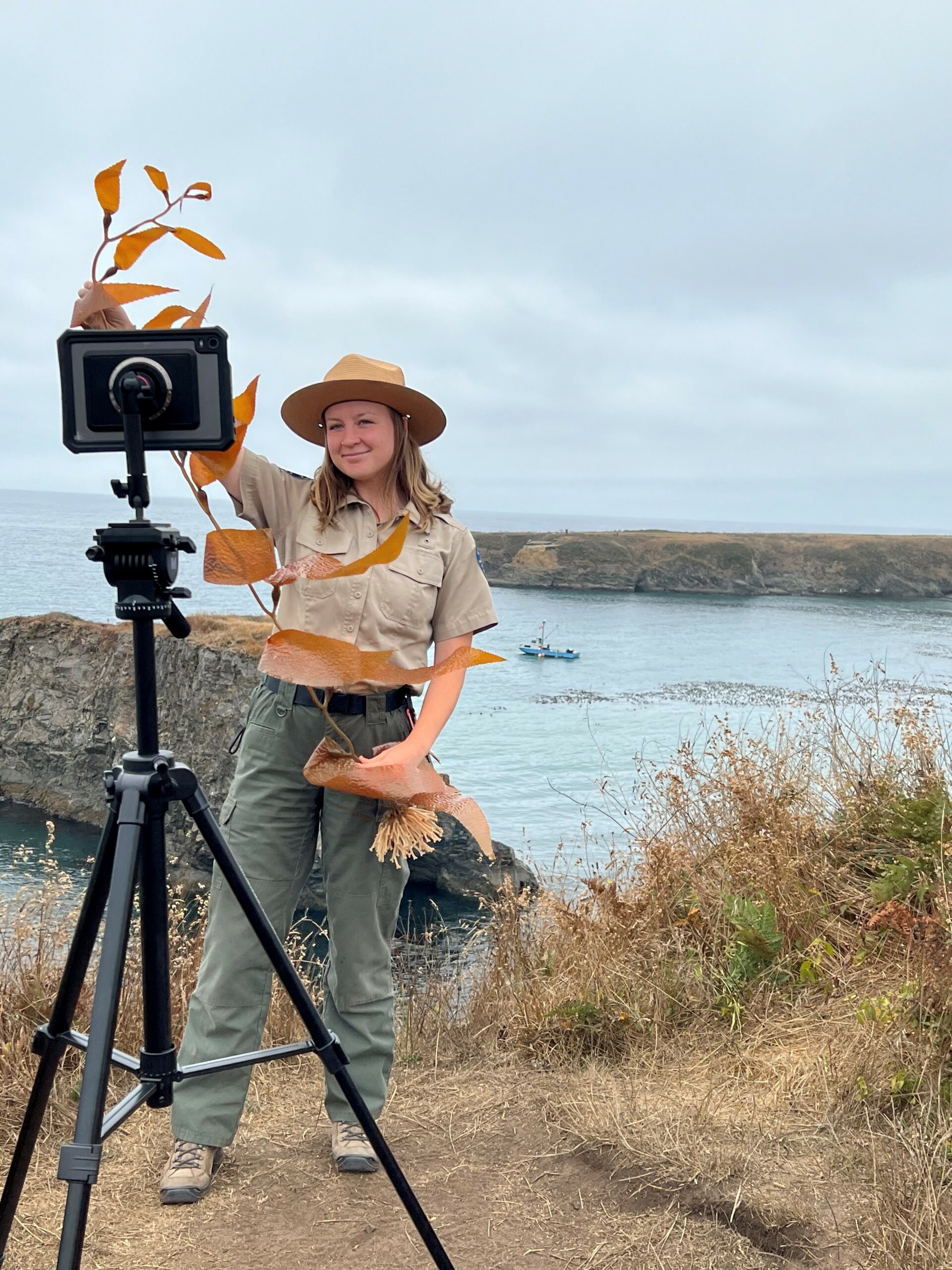
What are salmon doing in the trees at Mendocino Headlands State Park? In this program we will learn about the salmon life cycle and what makes salmon one of nature’s best nutrient transporters, as well as play a game of Salmon Says!
Unlock the mysteries of one of the world’s most fascinating organisms, the octopus! Join Park Interpreter Alex on the California coast for an engaging virtual field trip to Crystal Cove State Park’s Marine Protected Area and discover the fascinating adaptations octopuses use for survival. Students will discover a variety of octopus species while learning about animal defense mechanisms, life cycles, adaptations, human impacts, and how Marine Protected Areas (MPAs) are helping these curious and mesmerizing marine invertebrates.
Join us on a 45-minute virtual field trip to Crystal Cove State Park’s Marine Protected Area (MPA) to learn about tidepool habitats and the incredible adaptations that tidepool animals use to survive harsh environments where land meets the sea! Students explore topics including what is a habit, tides, adaptations, and defense mechanisms. Students also learn about Marine Protected Areas and how they help protect these fascinating and fragile tidepool ecosystems.
Join us at Carpinteria State Beach as we explore the animals found in our tidepools and how they survive the highs and lows of living in the tidal zones. We will discuss how certain physical features and behaviors help them find food, ward off predators, and thrive in a constantly changing environment.
Join California State Parks Interpreter Kat at MacKerricher State Park in reading the story book “The Snail and the Whale” by Julia Donaldson! Students will meet a snail riding on the tail of a whale through the ocean! One day the snail must save the whale, but she worries she may be too small for the job.
Get Groovy with Gaviota State Park with the Wavy Turban Snail. Together we’ll discover a bit about this curious little invertebrate and its habitat along the Santa Barbara Coast. Students will learn how to draw this special critter during this program. Program is great for all ages!
Join us on this special day as we celebrate the biodiversity of the Delta Meadows Park Property in Locke/Walnut Grove, CA. Together we will learn about the benefits of a healthy wetland ecosystem. Let’s explore this aquatic landscape and riparian habitat and identify the ways these important places provide food and shelter for wildlife. We will also come to understand the challenges that this ecosystem faces and learn about ways that we can help! Get ready to take a pledge to help care for our waterways and wetlands! Please bring a piece of paper and a writing utensil to maximize your participation.
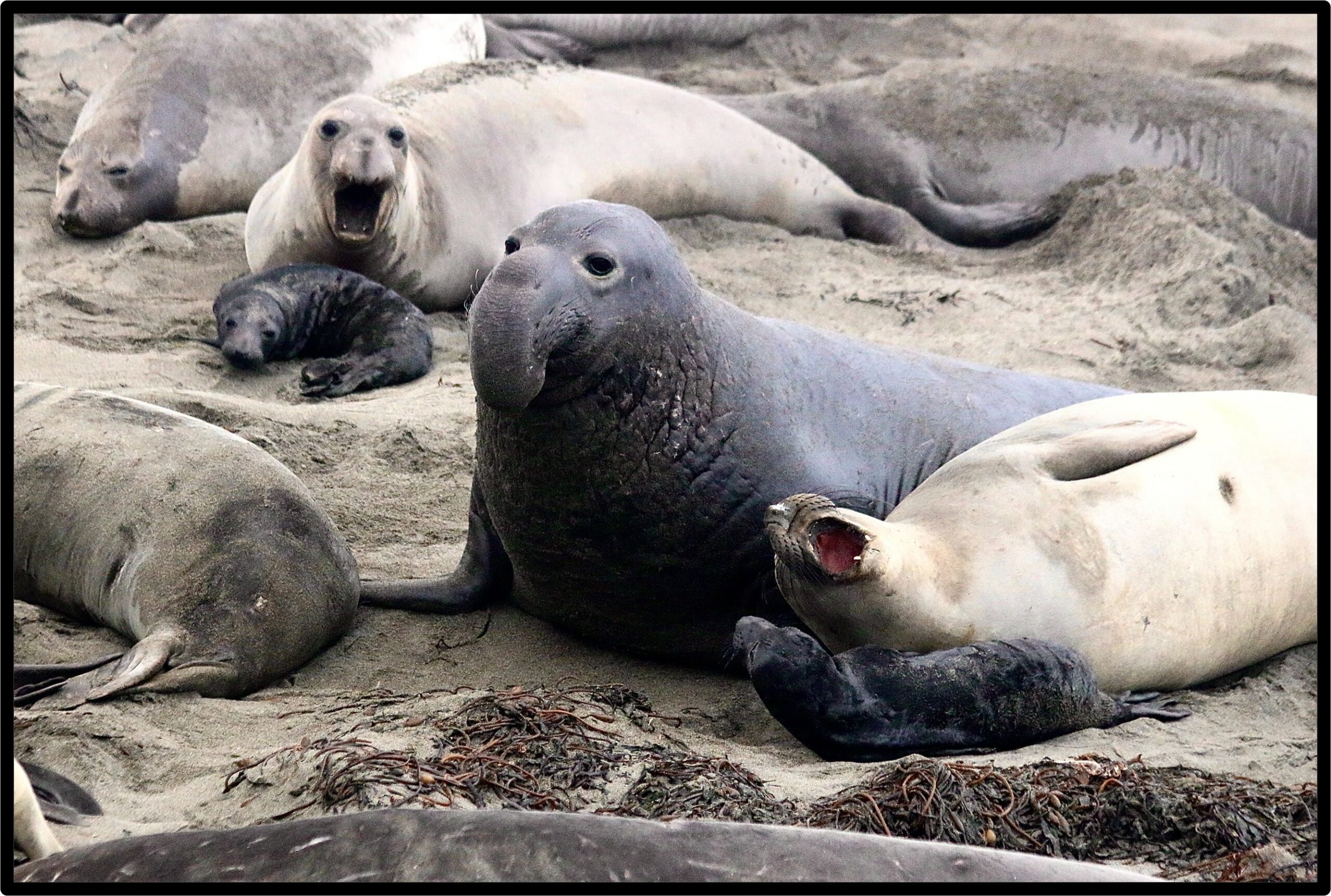
Dive deep into the fascinating lives of Northern Elephant Seals from Hearst San Simeon State Park! Watch these animals live from the largest mainland elephant seal rookery in the world during the peak of birthing and breeding season! Together, we’ll learn about the astounding adaptations that allow them to dive deep, migrate thousands of miles per year, go months without eating, and so much more. Please bring a piece of paper and a writing utensil to maximize your participation.
Celebrate World Read Aloud Day with a State Parks Interpreter from Prairie Creek Redwoods State Park! We will be reading “I Love Salmon and Lampreys, A Native Story of Resilience” by local author Brooke M. Thompson. More information about the story can be found at https://www.brookmthompson.com/book
“A Stone Is a Story” by Leslie Bernard Booth and illustrated by Mark Martin is a wonderful book that serves as a wonderful introduction or review to types of rocks and other geological concepts. Join us at Mt Tam for a read-along of this book and exploration of some of the rocks in this geo-gem of a State Park!
Are your students curious about building? It took a team of skilled workers 28 years to build Hearst Castle. Together with an interpretive guide, your students will explore ideas of design and construction by reading a book called “How a House is Built” by Gail Gibbons. After our story, we will apply these learned concepts to Hearst Castle while we explore the house and the Neptune Pool. This program incorporates STEAM ideas and concepts such as teamwork, planning, and imagination.
Join California State Park interpreters to celebrate World Wetlands Day! We’ll explore the Tijuana River National Estuarine Research Reserve, see where the river meets the sea at San Elijo State Beach, and enjoy bird’s-eye views of Los Peñasquitos Lagoon from Torrey Pines State Natural Reserve. Learn how wetlands protect wildlife and communities!
They they love to steal your snacks, they scavenge along the shore, and of course they just wanna have fun! Join us at Gaviota State Park as we discover the world of gulls! From their identification to their biology, there is so much to explore!
All aboard for the Westward Bound School Program. Students step back in time for a virtual tour of the historic Central Pacific Railroad Station and learn about the people who worked and traveled on the Transcontinental Railroad in the 1870s.
Happy Lunar New Year! / 恭喜发财! / 恭喜發財! Welcome 2026 by celebrating and learning with us at Angel Island State Park! We’ll talk about the Chinese immigrant experience in the 1900s and how that relates to modern lunar new year traditions. Teachers, make sure your students have a piece of paper and pencil! They will be drawing some of the traditions and learning how to write Chinese.
Celebrate International Day of Women and Girls in Science with the female scientists studying the San Diego Coast! Take a peek into a day as a real-life scientist and learn all about the important role science-based evidence plays in our State Parks.
Unlock the mysteries of one of the world’s most fascinating organisms, the octopus! Join Park Interpreter Alex on the California coast for an engaging virtual field trip to Crystal Cove State Park’s Marine Protected Area and discover the fascinating adaptations octopuses use for survival. Students will discover a variety of octopus species while learning about animal defense mechanisms, life cycles, adaptations, human impacts, and how Marine Protected Areas (MPAs) are helping these curious and mesmerizing marine invertebrates.
Explore and learn about the ancestral and modern life of the Chumash culture and people. Chumash descendants will share their cultural heritage, from traditional art and music to culinary practices and much more. Attendees will have the opportunity to engage with the speakers by asking questions, and gain a deeper appreciation for the resilience and contributions of the Chumash people both past and present. Join us for this enriching experience to celebrate and learn about the vibrant Chumash culture.
Join us as we explore the most complete example of a rural Chinese agricultural community in the United States! In this program, we will explore the Locke Boarding House Museum to discuss the history of California’s Chinese immigrant community and the role they played in building the Sacramento-San Joaquin River Delta. Along the way, students will learn about the discrimination and exclusion faced by Chinese immigrants, the contributions the Chinese people made to California’s agriculture industry, and how they found security and community in the town of Locke.
Join us at Carpinteria State Beach as we learn about harbor seals and their role in our ocean’s ecosystem. Students will learn about their haulouts and nurseries, diet, anatomy, and the incredible adaptations they exhibit to survive in the water and on land. We will conclude our program by discussing the threats harbor seals face and ways we can help protect these remarkable marine mammals.
Ever wondered what’s going on beneath your feet? Join California State Parks staff, where we’ll explore how the San Andreas Fault quite literally ‘rocks the bay’ at Tomales Bay State Park. Get ready to uncover Earth’s layers, crack into rock types, and explore how shifting plates and earthquakes have shaped Tomales Bay over millions of years. This program touches on geology, earth science, environmental studies, and natural history.
Join us on a 45-minute virtual field trip to Crystal Cove State Park’s Marine Protected Area (MPA) to learn about tidepool habitats and the incredible adaptations that tidepool animals use to survive harsh environments where land meets the sea! Students explore topics including what is a habit, tides, adaptations, and defense mechanisms. Students also learn about Marine Protected Areas and how they help protect these fascinating and fragile tidepool ecosystems.
Lt. Col. Allen Allensworth had been one of the foremost leaders of a remarkable group of African American military personnel known as the Buffalo Soldiers. This program will be an introduction to the long reaching history of the iconic Buffalo Soldiers, their travels and contributions to the great State of California, and their lasting legacy within the state and national park systems.
Join us at Gaviota State Park for whales of fun with our favorite marine mammal: the whale! Together we’ll discover a bit about this majestic mammal, its anatomy, and its habitat along the Santa Barbara Coast. Students will learn how to draw this special marine mammal during this program.
Explore a traditional food staple of California Native Peoples before European contact. We will examine the history of Indigenous peoples of California and their deep, enduring connection to the land. Learn how acorns, known as uuti in the Nisenan language, were traditionally gathered and processed into a sustainable food source that supported communities for tens of thousands of years.
Join park staff at Angel Island State Park to learn the story of the courageous lighthouse keeper Juliet Fish Nichols. We will share the beautifully illustrated book “Keeper of the Light: Juliet Fish Nichols Fights the San Francisco Fog”. Park staff will reenact moments from the book, including when Juliet had to ring the fog bell by hand!
Celebrate World Wildlife Day with a deep dive into the fascinating lives of Northern Elephant Seals from Hearst San Simeon State Park! Watch these animals live from the largest mainland elephant seal rookery in the world during! Together, we’ll learn about the astounding adaptations that allow them to dive deep, migrate thousands of miles per year, go months without eating, and so much more. Please bring a piece of paper and a writing utensil to maximize your participation.
Join us from the shores of Lake Tahoe at Sugar Pine Point State Park to learn about the cutest little creature in North America. That’s right! We’ll be talking about the American Pika. The peaks surrounding Lake Tahoe are home to the Pika, but with climate change drastically effecting our weather patterns these places and the pikas lives have been put in harm’s way. We will be learning about and admiring the cuteness and lifestyle of the Pika in our ever-changing environment.
Join us at Marshall Gold Discovery SHP as we explore the history of the Coloma Valley before, during and after the Gold Discovery. During our program, we will take a walk through our park and learn how the discovery of gold changed California both culturally and environmentally. We will start with the story of the Coloma Valley before the Gold Discovery and will learn about the history of the California Gold Rush and its impact on the town of Coloma and the surrounding valley.
Did you know women were instrumental in creating Angel Island State Park, and in saving the Angel Island Immigration Station? In honor of Women’s History Month, we’ll explore how Marin County matrons and Asian American activists worked to preserve this very special island for all of us to enjoy and learn from.
Join Interpreter Erika at Humboldt Redwoods State Park and Interpreter Isabella at Asilomar State Beach to discover the untold HERstory of these iconic spaces. Learn about the women who fought for the land and sea protections that millions of visitors now experience and enjoy, and the architect who ties them together!
Accompany Guide Elaine on an enchanting journey as she explores the hilltop, uncovering the captivating stories, history, intricate artistry, and architectural marvels that define the legacy of the women associated with Hearst Castle.
All aboard for the Westward Bound School Program. Students step back in time for a virtual tour of the historic Central Pacific Railroad Station and learn about the people who worked and traveled on the Transcontinental Railroad in the 1870s.
Hop on board the Horses to Horsepower Program at the California State Railroad Museum to experience what it was like to build the nation’s first Transcontinental Railroad! Your conductor will virtually escort you to five different stations to Hop onboard to learn about the building of the Transcontinental Railroad and about some of the men and women who made the railroad important to a growing nation and California.
The redwood forest is home to a wide range of plants and animals, some of which have smelly survival skills. In this interactive program, we will discover how three “yucky stinkers” use their potent powers as helpful adaptations in Richardson Grove State Park and Humboldt Redwoods State Park.
Unlock the mysteries of one of the world’s most fascinating organisms, the octopus! Join Park Interpreter Alex on the California coast for an engaging virtual field trip to Crystal Cove State Park’s Marine Protected Area and discover the fascinating adaptations octopuses use for survival. Students will discover a variety of octopus species while learning about animal defense mechanisms, life cycles, adaptations, human impacts, and how Marine Protected Areas (MPAs) are helping these curious and mesmerizing marine invertebrates.
An exclusive interview with a young gray whale on his first migration up the Pacific Coast. Learn about these marine mammals’ extraordinary annual journey, and how Marine Protected Area’s help them along the way. Get ready to take a deep dive and get the scoop into a really cool whale of life!
Join us on a 45-minute virtual field trip to Crystal Cove State Park’s Marine Protected Area (MPA) to learn about tidepool habitats and the incredible adaptations that tidepool animals use to survive harsh environments where land meets the sea! Students explore topics including what is a habit, tides, adaptations, and defense mechanisms. Students also learn about Marine Protected Areas and how they help protect these fascinating and fragile tidepool ecosystems.
Join us for a special Women’s History Month PORTScast as we travel into the tall, awe-inspiring redwood forests of Northern California to discover the amazing women who helped save them. Who Saved the Redwoods? shares the stories of women’s clubs, community helpers, and brave leaders who spoke up for the forests at a time when women didn’t even have the right to vote yet. Learn how these women used teamwork, creativity, and courage to protect some of the last ancient redwoods—and explore the HERstory behind the beautiful groves we can still visit in our parks today.
Are you ready to discover the mysteries of the sandy shore? From the mysterious creatures and incredible journey that a piece of sand travels, there is so much to explore. Join us at Gaviota State Park to discover the role that the sandy shore plays in our local ecosystem.
Visit MacKerricher State Park to explore the similarities and differences between humans and marine mammals, specifically the Harbor Seal! Students will observe and identify what crucial adaptations ensure seal survival in the cold Pacific waters of northern California.
Become a scientist on the beach of Hearst San Simeon State Park! Together, we’ll investigate amazing tide pools, while learning to use scientific tools. Be sure to bring blank paper and a writing utensil so that you can record your observations!
When you visit the tidepools you see all adult animals, but where are the tidepool babies and how do they look? Observe their microscopic forms and find out more about the lifecycle of some of our favorite tidepool animals. Natural Bridges Marine Protected Area allows these animals to grow up.
Join us at Gaviota State Park for waves of fun with our favorite arthropod: the crab! Together we’ll discover a bit about this majestic arthropod, its anatomy, and its habitat along the Santa Barbara Coast. Students will learn how to draw this special creature during this program. Program is great for all ages! Recommended art supplies: – Paper – Drawing tools like pencil, pen, and/or colored pencils
Dive into the fascinating world of these gentle giants as we explore their incredible adaptations at MacKerricher State Park. Discover how humanity’s relationship with whales has evolved from hunting them to flipping the script and championing their protection at Point Lobos State Natural Reserve. Lastly, we’ll explore how these whales are helping to combat climate change and learn how we can all help protect these magnificent creatures at Point Dume State Beach.
Join us for a journey back in time to the 1840s and discover how California’s story began at Sutter’s Fort! Located in the heart of Midtown Sacramento, Sutter’s Fort State Historic Park helps us explore the early days of Sacramento and how California started to grow. Together, we’ll learn how Sutter’s Fort changed California and how those changes affected Native American communities and the land and wildlife of the Sacramento Valley.
Giant sequoias aren’t the only being that survives all seasons at Calaveras Big Trees! Students will be introduced to giant sequoias and other living things that call this place home as well as their adaptations to handle the mountain weather. This program mainly takes place inside our Visitor Center museum.
Meet three of your coastal neighbors: elephant seals, sea otters, and harbor seals! Together, we’ll travel down the central coast of California from Hearst San Simeon State Park to Morro Bay State Park, making three stops along the way to learn about the wild lives of each of these marine mammals. We’ll dive into their amazing adaptations, uncovering their super powers for survival, and will compare and contrast what makes each of these species so unique.
Join us at Marshall Gold Discovery SHP as we explore the history of the Coloma Valley before, during and after the Discovery of Gold. During our program, we will be stationed at an overlook within the valley where we will learn how the trees of the Coloma Valley help us tell the story of the gold rush and its impact on the town of Coloma and the surrounding valley. By the end of this program, we will discover how these trees serve as reminders of historical events like the discovery of gold changed California both culturally and environmentally.
Mount Tamalpais State Park is well-known for its views above the famous San Francisco Bay Area Fog. Besides being scenic, this coastal fog is what enables California’s majestic coast redwood forests to survive. Join this PORTScast to learn about this fog, including how it is being affected by climate change and what you can do to help!
Join us at Oceano Dunes SVRA for a virtual field trip to learn all about how sand dunes are formed! This program is designed for students 2nd-7th. We will learn how sand is formed, how our big sand dunes were made, and the plant and animal life that lives in this harsh environment!
When you visit the tidepools you see all adult animals, but where are the tidepool babies and how do they look? Observe their microscopic forms and find out more about the lifecycle of some of our favorite tidepool animals. Natural Bridges Marine Protected Area allows these animals to grow up.
Newspaper publisher William Randolph Hearst acquired a vast art collection for his estate in San Simeon, Ca. Students will go on a journey exploring the art and architecture of Hearst Castle including Roman artifacts, mosaics, paintings, tapestries, and more, all with a dash of California history. Your students will explore the gardens, pools, and historic structures with an interpretive guide. This all-ages program is adaptable to support art, history, & social science.
Step into the world of decomposition as we discover how mighty organisms benefit our environment by creating healthy soil. This program is suitable for 1-4 grade and was developed utilizing NGSS, EEI, and Common Core standards.
Unlock the mysteries of one of the world’s most fascinating organisms, the octopus! Join Park Interpreter Alex on the California coast for an engaging virtual field trip to Crystal Cove State Park’s Marine Protected Area and discover the fascinating adaptations octopuses use for survival. Students will discover a variety of octopus species while learning about animal defense mechanisms, life cycles, adaptations, human impacts, and how Marine Protected Areas (MPAs) are helping these curious and mesmerizing marine invertebrates.
Ever wondered what’s going on beneath your feet? Join California State Parks staff, where we’ll explore how the San Andreas Fault quite literally ‘rocks the bay’ at Tomales Bay State Park. Get ready to uncover Earth’s layers, crack into rock types, and explore how shifting plates and earthquakes have shaped Tomales Bay over millions of years. This program touches on geology, earth science, environmental studies, and natural history.
Join us on a virtual field trip to Crystal Cove State Park’s Marine Protected Area (MPA) to learn about tidepool habitats and the incredible adaptations that tidepool animals use to survive harsh environments where land meets the sea! Students explore topics including what is a habit, tides, adaptations, and defense mechanisms. Students also learn about Marine Protected Areas and how they help protect these fascinating and fragile tidepool ecosystems.
All aboard for the Westward Bound School Program. Students step back in time for a virtual tour of the historic Central Pacific Railroad Station and learn about the people who worked and traveled on the Transcontinental Railroad in the 1870s.
Hop on board the Horses to Horsepower Program at the California State Railroad Museum to experience what it was like to build the nation’s first Transcontinental Railroad! Your conductor will virtually escort you to five different stations to Hop onboard to learn about the building of the Transcontinental Railroad and about some of the men and women who made the railroad important to a growing nation and California.
Come meet Rubi the bear at Sugar Pine Point State Park. In this program we will explore the differences between wildland bears of the Tahoe backcountry and our mischievous city bears that have become more and more comfortable around humans. We will look at some characteristics and adaptations of these incredible creatures. For example, did you know that black bears in California can have a wide range of fur colors from black/dark brown to cinnamon blonde. We will also explore what our role is in keeping bears wild. We need to lock up our trash and litter less. We will play a flashcard guessing game about bear species that live all around the world.
What are salmon doing in the trees at Mendocino Headlands State Park? In this program we will learn about the salmon life cycle and what makes salmon one of nature’s best nutrient transporters, as well as play a game of Salmon Says!
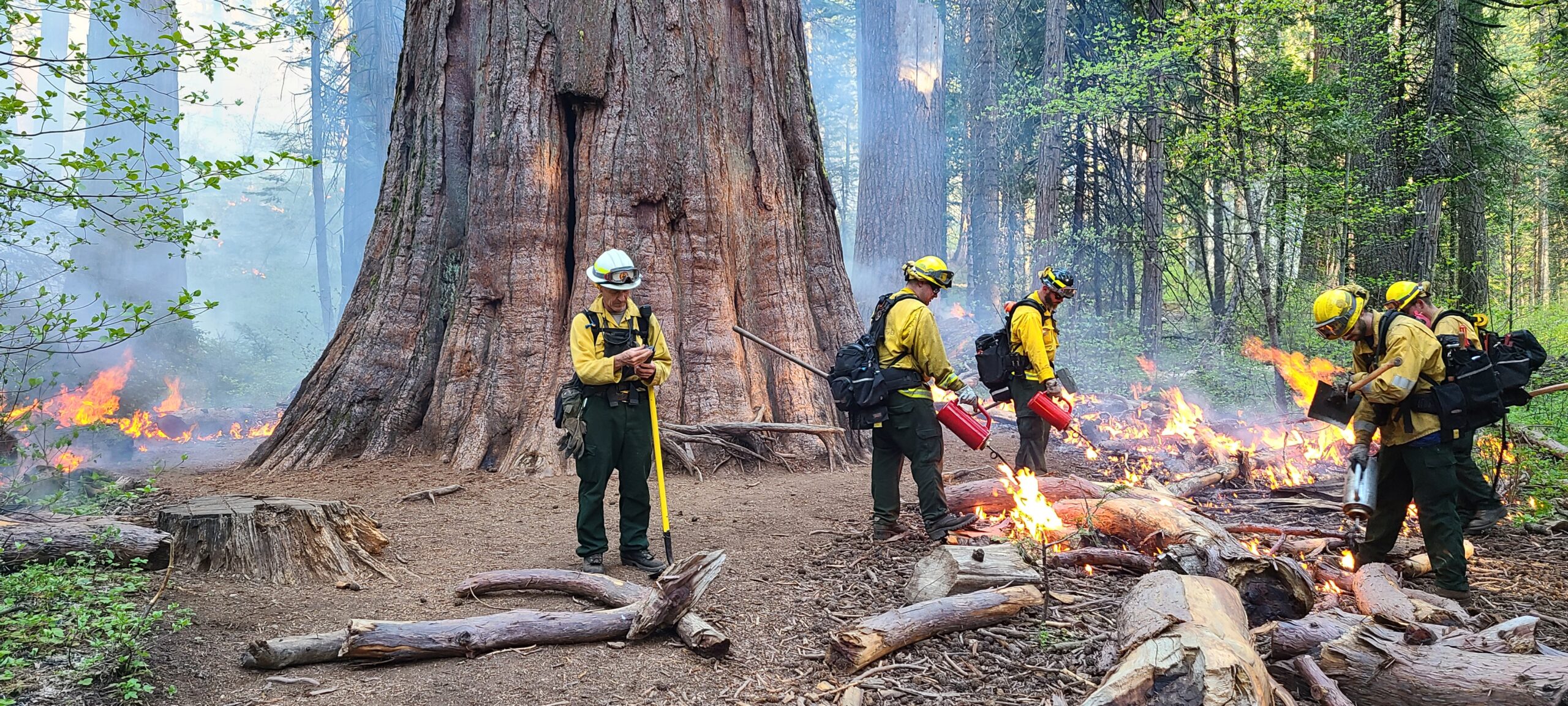
Massive wildfires often make the news, but can a smaller fire be a forest friend? Students will be introduced to the complexity of fire, how we have influenced it, and how important it is for the world’s biggest individual tree, the giant sequoia!
Join Angel Island State Park to learn all about Californian trees through time! How do tree cross-sections relate to their age? What are the longest and shortest living tree species in California? Which historical innovations did these trees inspire? Learn how to care for trees starting at home!
Wrap up this year’s Earth Week by Celebrating Arbor Day with Prairie Creek Redwoods State Park! Join a State Parks Interpreter to learn about the history of Arbor Day and the importance of celebrating the world’s tallest tree, the coast redwood.
Spring time is an exciting time of year at Point Lobos! Harbor seals come ashore to have their pups. Join Interpreters Ashley and Isabella to take a closer look at the adaptations of these unique animals and how being in a marine reserve helps these animals survive. Students will also have the opportunity to think about what actions they can take to help protect these marine mammals.
Colonel Allen Allensworth was a man of great vision- a Civil War Veteran, Minister, City Planner and Leader of the Buffalo Soldiers (all-African American army regiments in the Western Frontier of the United States). In the twilight of his life he began builing his dream, the town of Allensworth. This program will be an introduction to architectural drawing and history at Colonel Allensworth State Historic Park. Break out your drawing pencils and sketchpads to take a closer look and drawing the historic landscapes and architecture at Allensworth. The Future ‘Parkitects’ of California!
Learn about the rich cultural, natural and historic importance of Humboldt Lagoons State Park! Join Interpreter Cochise on the Northern California coast to learn about how important the lagoons are to not just plants & animals, but Yurok people and Yurok culture. This program is for 3rd grade and above.
Join us at Gaviota State Park to learn about the species who have poked their head into the Santa Barbara Channel, but haven’t been seen much since. Were they the forward scouts of an incoming population or just one-off appearances of lone individuals? Together we’ll discuss these incredible species and have a look at the changing climate of the Santa Barbara region.
Join a State Park Interpreter from Jedediah Smith Redwoods State Park to hear about the incredible story of the Marbled Murrelet. This seabird spends the far majority of its life floating along the coastline, but for a brief moment of their life, they can be seen dashing through the tops of redwoods. Join to learn more about this bird. Ultimately, this program will expand your knowledge of the Marbled Murrelet and what you can do to help them succeed!
Join us at Oceano Dunes SVRA for a virtual field trip to learn all about how sand dunes are formed! This program is designed for students 2nd-7th. We will learn how sand is formed, how our big sand dunes were made, and the plant and animal life that lives in this harsh environment!
When you visit the tidepools you see all adult animals, but where are the tidepool babies and how do they look? Observe their microscopic forms and find out more about the lifecycle of some of our favorite tidepool animals. Natural Bridges Marine Protected Area allows these animals to grow up.
Hop on board the Horses to Horsepower Program at the California State Railroad Museum to experience what it was like to build the nation’s first Transcontinental Railroad! Your conductor will virtually escort you to five different stations to Hop onboard to learn about the building of the Transcontinental Railroad and about some of the men and women who made the railroad important to a growing nation and California.
In this program, students will be introduced to the wonders of the giant sequoia and learn all about their cool adaptations. We will walk around part of a giant sequoia grove and discuss the complexity of these ancient trees and the mixed conifer forest as a whole.
During this program, your students will explore the mythology, the art, and the architecture of ancient civilizations. Statues such as the Egyptian goddess Sekhmet will transport students 3000 years back in history. The Neptune Pool will provide proof that the Greeks and Romans still influence our world today. Hearst Castle preserves a collection of art and artifacts that symbolizes the traditions and beliefs of these cultures. This program supports 6th-grade curriculum standards.
Join us along the Gaviota Coast to discover the importance of marine protected areas (MPA’s)! Throughout our program, we will examine a number of species likely to benefit from the MPAs, and explore the diverse underwater habitats we are working to protect!
Join us on a virtual field trip to Crystal Cove State Park’s Marine Protected Area (MPA) to learn about tidepool habitats and the incredible adaptations that tidepool animals use to survive harsh environments where land meets the sea! Students explore topics including what is a habit, tides, adaptations, and defense mechanisms. Students also learn about Marine Protected Areas and how they help protect these fascinating and fragile tidepool ecosystems.
Honor the history and diversity of the Asian American Pacific Islander immigrants that passed through the Angel Island Immigration Station from 1910-1940. Join Angel Island State Park and the Angel Island Immigration Station Foundation LIVE at the historic detention barracks as we delve into their stories. Submit questions through a Q&A feature; we might just be able to answer it!
Hop on board the Horses to Horsepower Program at the California State Railroad Museum to experience what it was like to build the nation’s first Transcontinental Railroad! Your conductor will virtually escort you to five different stations to Hop onboard to learn about the building of the Transcontinental Railroad and about some of the men and women who made the railroad important to a growing nation and California.
Explore and learn about the ancestral and modern life of the Chumash culture and people. Chumash descendants will share their cultural heritage, from traditional art and music to culinary practices and much more. Attendees will have the opportunity to engage with the speakers by asking questions, and gain a deeper appreciation for the resilience and contributions of the Chumash people both past and present. Join us for this enriching experience to celebrate and learn about the vibrant Chumash culture.
Learn about the rich cultural, natural and historic importance of Humboldt Lagoons State Park! Join Interpreter Cochise on the Northern California coast to learn about how important the lagoons are to not just plants & animals, but Yurok people and Yurok culture. This program is for 3rd grade and above.
Learn about the plants and animals that live in this coastal habitat. Join us at Gaviota State Park to discover why surf grass is important and how it helps ocean life.
Ever wondered what’s going on beneath your feet? Join California State Parks staff, where we’ll explore how the San Andreas Fault quite literally ‘rocks the bay’ at Tomales Bay State Park. Get ready to uncover Earth’s layers, crack into rock types, and explore how shifting plates and earthquakes have shaped Tomales Bay over millions of years. This program touches on geology, earth science, environmental studies, and natural history.
Join us at Carpinteria State Beach as we explore the animals found in our tidepools and how they survive the highs and lows of living in the tidal zones. We will discuss how certain physical features and behaviors help them find food, ward off predators, and thrive in a constantly changing environment.
Unlock the mysteries of one of the world’s most fascinating organisms, the octopus! Join Park Interpreter Alex on the California coast for an engaging virtual field trip to Crystal Cove State Park’s Marine Protected Area and discover the fascinating adaptations octopuses use for survival. Students will discover a variety of octopus species while learning about animal defense mechanisms, life cycles, adaptations, human impacts, and how Marine Protected Areas (MPAs) are helping these curious and mesmerizing marine invertebrates.
Join PORTS virtually for an accessible chair yoga session! Find peace and grounding from the comfort of your classroom or home. An opportunity to learn how to stretch the body and increase your flexibility with mindful movement. All you need is time and a chair to let all your stress drift out to sea.